AI In Breast Cancer Detection: Diagnosis & Personalized Care
TL;DR:
Artificial Intelligence (AI) rapidly advances breast cancer detection and treatment, offering earlier diagnoses, improved accuracy, and personalized care. Despite concerns about bias and integration into existing workflows, studies like Indiana University's AI-driven research pave the way for more equitable healthcare solutions.
Introduction:
Imagine being able to detect breast cancer years before it shows up on a traditional mammogram—well, AI is making that a reality. As AI technology advances, it's transforming breast cancer detection and treatment, offering patients a better shot at earlier diagnosis, personalized care, and improved outcomes. But, like any innovation, there are pros, cons, and challenges. Let's break down how AI is changing the game and what it means for the future of healthcare.
Benefits of AI in Breast Cancer Detection
AI-powered tools are doing more than just scanning mammograms—they're pushing the limits of what's possible in healthcare. Here's how:
1. Earlier Detection
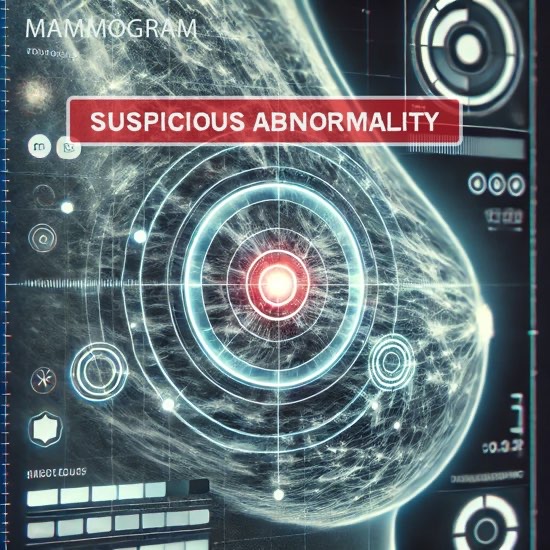
AI can detect subtle signs of breast cancer up to two years before being visible to the human eye. This early detection is life-saving, allowing for more effective treatments and higher survival rates.
2. Improved Accuracy
Studies indicate that AI systems can rival or outperform radiologists in identifying breast cancer. With AI assistance, healthcare professionals can reduce the number of false negatives and false positives, ensuring more reliable diagnoses.
3. Increased Efficiency
Radiologists are under immense pressure to process a high volume of screenings. AI helps streamline their workflow by highlighting high-risk cases, allowing them to focus on patients who need urgent attention. The result? Faster diagnoses and shorter wait times.
4. Personalized Risk Assessment
AI doesn't stop at detection. It also analyzes vast data points to provide personalized breast cancer risk profiles, leading to customized screening schedules and prevention strategies tailored to each patient.
Pros and Cons of AI in Breast Cancer Detection
Like every coin, AI has two sides—let's explore both the advantages and potential hurdles:
Pros:
- Enhanced Detection of Small and Subtle Lesions
AI systems excel at identifying even the most minor irregularities in breast tissue, which may be difficult for the human eye to detect, especially in dense breast tissue. By pinpointing these early-stage abnormalities, AI can assist in identifying cancers that might otherwise go unnoticed until they are more advanced, offering patients a better chance for early intervention and successful treatment. - Consistent Performance Without Fatigue
Unlike human radiologists, who can experience fatigue, especially when reviewing hundreds of mammograms, AI systems maintain the same precision and efficiency regardless of time or workload. This consistency can reduce the risk of missed diagnoses due to tiredness or human error, making the diagnostic process more reliable. - Potential to Reduce Healthcare Disparities
AI has the potential to bridge gaps in healthcare access, particularly in regions or facilities where experienced radiologists are scarce. By providing expert-level analysis, AI can help ensure that women in underserved communities receive timely and accurate breast cancer screenings, improving early detection rates and outcomes, regardless of geographic location. - Ability to Process and Analyze Large Volumes of Data Quickly
One of AI's greatest strengths is its capacity to handle vast amounts of data in real-time. AI can process thousands of mammograms in a fraction of the time it would take a human. This enables radiologists to focus on interpreting complex cases, accelerating the diagnostic process while maintaining accuracy. This efficiency helps reduce patient waiting times, offering faster peace of mind or quicker access to treatment.
Cons:
- Concerns About Data Privacy and Security
With AI systems heavily relying on patient data to "learn" and make accurate diagnoses, concerns about data privacy arise. If healthcare providers aren't careful with data encryption and storage, sensitive health information could be vulnerable to breaches. This is particularly critical in an era where cyber-attacks on healthcare systems are rising, making patient privacy and data security a key challenge in the widespread adoption of AI.
- Potential for Bias in AI Algorithms
AI models are only as good as the data they are trained on. The algorithms can develop biases if the data used to train AI systems isn't diverse enough—such as excluding data from different ethnicities, ages, or genetic backgrounds. For example, if an AI model is trained primarily on mammograms from Caucasian women, it might be less accurate when assessing breast cancer risk in women of color. This bias could lead to disparities in healthcare outcomes rather than reducing them, making training AI systems on diverse datasets crucial.
- Need for Extensive Clinical Validation Before Widespread Adoption
While AI has shown great promise in research and controlled environments, widespread clinical use requires thorough testing and validation. AI systems must be evaluated rigorously in real-world clinical settings to ensure they are reliable, accurate, and safe. This process can take time and is necessary to gain regulatory approval. Without proper validation, there's a risk of over-reliance on AI, which could lead to diagnostic errors if the technology still needs to be fully proven.
- Challenges in Integrating AI Systems into Existing Healthcare Workflows
Implementing AI in healthcare isn't as simple as installing new software—it requires integrating the technology into existing workflows, which can be a significant challenge. Healthcare providers need to ensure that AI tools complement the work of radiologists rather than disrupt it. Hospitals and clinics may also have to invest in new infrastructure or retrain staff, which can be costly and time-consuming. Overcoming these challenges is crucial for AI's seamless adoption into routine clinical practice.
- Potential Over-Reliance on AI, Reducing Human Expertise Over Time
While AI can greatly assist radiologists, there's concern that heavy reliance on AI tools may lead to a gradual decline in human expertise. As more of the diagnostic workload shifts to AI systems, radiologists may have fewer opportunities to hone their skills, potentially creating a gap in human judgment and decision-making over time. It's important to ensure that AI enhances human expertise rather than replacing it so that healthcare providers can use AI as a tool rather than a crutch.
Indiana University's AI-Driven Breast Cancer Study
Indiana University is at the forefront of AI and healthcare innovation. Researchers there tackle the dual challenges of accurate detection and healthcare equity. Recently, the university received a $3.7 million grant from the National Cancer Institute for an ambitious study using federated learning.
Highlights of the Study:
- Addressing health inequities in breast cancer risk prediction.
- Using federated learning to analyze data across institutions while maintaining patient privacy.
- Developing AI models that consider health disparities and aim to reduce them.
- Creating an open-source AI model to predict breast cancer risk for diverse populations.
This study is a promising step toward improving detection accuracy and tackling the critical issue of healthcare inequality.
Conclusion
AI is undeniably changing the landscape of breast cancer detection and treatment. The potential is massive, from catching cancer earlier to tailoring treatments to individual patients. But as with any new technology, we need to address challenges like bias, privacy, and the role of human experts. As ongoing research like Indiana University's project pushes the boundaries, AI may soon become an indispensable tool in the fight against breast cancer.
What's next? Stay informed, follow the latest research, and consider how AI could impact healthcare in your community.
Call to Action:
Want to stay updated on AI's role in healthcare? Subscribe to our newsletter for the latest trends, news, and expert interviews. Together, we can empower better, more personalized care.