AI in Healthcare: Diagnostics, Treatment, and Beyond
TL;DR:
Artificial intelligence is making massive strides in healthcare, especially in diagnostic imaging, personalized treatments, and clinical decision-making. It's not about replacing doctors but empowering them with better tools for diagnosis and care. AI also helps improve patient safety and outcomes with real-time insights, virtual assistants, and precision medicine.
Introduction:
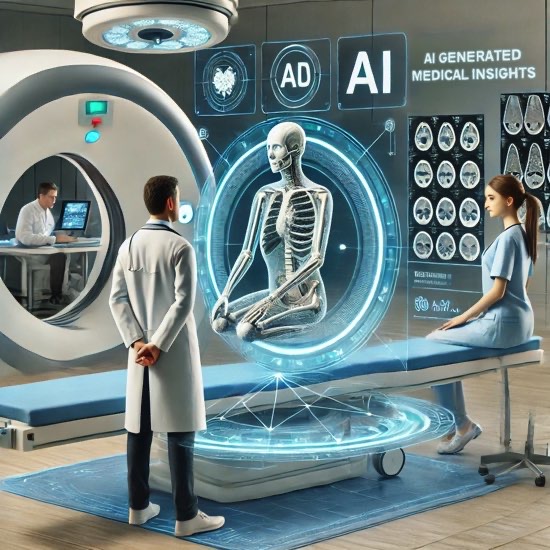
AI in healthcare is no longer science fiction—it's happening now. From reading X-rays more accurately to creating personalized treatment plans, AI plays an increasing role in the health sector. But it's not here to replace human doctors; instead, it's enhancing the capabilities of medical professionals. Let's dive into how AI reshapes healthcare, improves diagnoses, and makes treatments more precise and efficient.
1. AI in Diagnostic Tools and Imaging
One of the most impressive applications of AI is in diagnostic imaging:
- AI algorithms can now accurately analyze X-rays, MRIs, and CT scans, often detecting anomalies the human eye might miss.
- These advanced systems are already being used to identify lung nodules and signs of cancer, leading to earlier and more accurate diagnoses.
Key Takeaway:
AI is helping healthcare professionals diagnose complex diseases faster and more precisely.
2. Personalized Treatment Plans
Imagine a world where your treatment plan is tailor-made for you—AI is making that possible:
AI can recommend the best possible treatment options for each patient by analyzing a combination of genetic data, medical history, and lifestyle factors.
- This technology is also driving the field of precision medicine by identifying specific biomarkers, allowing for highly targeted therapies.
Key Takeaway:
AI brings us closer to individualized healthcare, where professionals can optimize treatments for each patient's unique profile.
3. Clinical Decision Support
AI-powered tools are making waves in clinical decision-making:
- These systems analyze real-time patient data and offer insights to help healthcare professionals make more informed decisions.
From predicting patient outcomes to staying current with the latest medical guidelines, AI helps reduce errors and improve care.
Key Takeaway:
With AI, healthcare providers can make better, faster decisions, leading to improved patient care.
4. Virtual Medical Assistants
AI-powered virtual assistants are taking over many routine healthcare tasks:
- These assistants can answer basic patient questions, schedule appointments, and send medication reminders.
- By handling these everyday tasks, AI frees healthcare professionals to focus on more complex issues.
Key Takeaway:
AI virtual assistants streamline administrative work, allowing doctors and nurses to prioritize patient care.
5. Improving Patient Safety and Outcomes
AI is also stepping up to improve patient safety:
- These systems can spot potential errors, assess patient risk, and optimize drug delivery to minimize complications.
- By flagging problems earlier, AI ensures better patient outcomes.
Key Takeaway:
AI-driven insights can prevent medical errors and improve overall patient safety.
FAQ:
Q1: Will AI replace doctors in the future?
No, AI is designed to support doctors, not replace them. It helps with diagnostics and treatment planning but can't replace the human touch in healthcare.
Q2: How does AI make diagnoses more accurate?
AI analyzes medical images and patient data with algorithms that detect patterns and anomalies, often more accurately than the human eye.
Q3: What is precision medicine, and how does AI help?
Precision medicine is a treatment approach tailored to a patient's genetic makeup and lifestyle. AI helps by identifying biomarkers that make treatments more targeted and effective.
Q4: Are there any ethical concerns with AI in healthcare?
Yes, data privacy, algorithm bias, and transparency are important considerations that the Healthcare industry will address as AI becomes more integrated into healthcare.
Conclusion:
AI's role in healthcare is growing fast, from improving diagnostic accuracy to creating personalized treatment plans and enhancing patient safety. However, AI isn't here to replace healthcare professionals, but to provide them with the tools they need to offer better care. While there are still challenges to consider—like ethics and data privacy—the potential benefits are enormous.
Call to Action:
Are you curious about how AI can improve healthcare in the future? Follow our blog for more updates on AI and medical innovations. Take advantage of the latest trends that could change how we receive healthcare!
Comments
Sign in to join the conversation.
No comments yet