Soaring to New Heights: Generative AI in Education
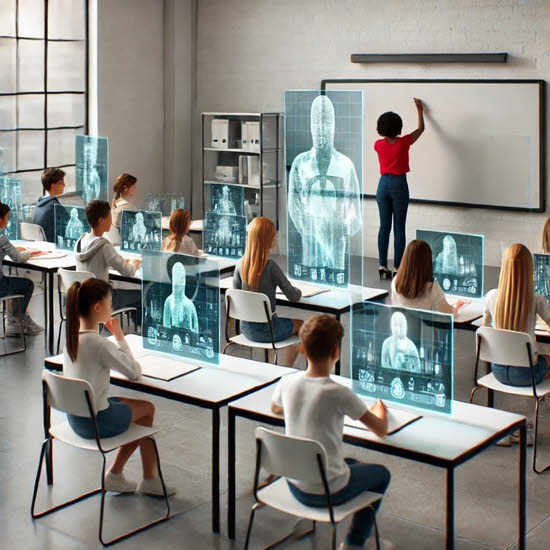
TL;DR:
Generative AI revolutionizes education by personalizing learning, boosting teacher efficiency, and fostering creativity. It prepares students for future AI-driven careers, offering both opportunities and challenges to educational systems.
Introduction:
Imagine a world where education is uniquely tailored to each student, teachers are free from administrative burdens, and creativity thrives in every classroom. Sounds like a dream, right? Thanks to Generative AI, this dream is becoming a reality. Generative AI is not just the latest tech fad; it’s reshaping education profoundly, making learning more personalized, engaging, and future-focused. In this blog, we’ll explore how Generative AI transforms the educational landscape and empowers students and teachers to excel in ways we never thought possible.
1. Personalizing the Learning Experience
Generative AI is unlocking personalized education in previously unimaginable ways. AI helps educators deliver content that resonates with each student by analyzing individual learning styles, preferences, and progress.
AI can generate tailored study materials, quizzes, and simulations that adjust to a student’s performance in real time. For instance, an AI tutor might offer math problems at just the right difficulty level, or language learners might practice with AI-powered conversations based on their skill level.
Moreover, this personalization can bring quality education to students who previously needed access. Imagine a world where AI-generated content helps educate millions of children globally, regardless of their geographic or socioeconomic challenges.
2. Empowering Teachers to Focus on What Matters
One of the most immediate benefits of Generative AI is how it helps teachers streamline their work. AI can handle time-consuming tasks like:
- Creating lesson plans
- Generating quizzes and grading assessments
- Analyzing student performance data to highlight areas needing improvement
With AI managing these repetitive tasks, teachers have more time to engage directly with students and focus on innovation and mentoring. By shifting the workload, AI lets educators spend more time fostering meaningful connections with students and addressing individual learning challenges.
Key Takeaways:
- AI as a time-saver: AI reduces teachers’ administrative burden, freeing time for student engagement.
- Data-driven insights: AI helps educators make data-driven decisions to improve student outcomes.
3. Fostering Creativity and Critical Thinking
Far from stifling creativity, Generative AI can enhance it. With its ability to provide instant access to resources, generate new ideas, and simulate scenarios, AI acts as a catalyst for student creativity.
Students can use AI for brainstorming, explore “what-if” scenarios, or even co-create artwork and stories. AI is not a replacement for creative thought but a powerful tool to inspire new ways of thinking. This tech encourages students to explore solutions to problems and critically analyze information.
AI Tools for Creativity:
- Generate ideas for creative writing or art
- Simulate historical, scientific, or literary scenarios
- Analyze and refine solutions to complex problems
4. Preparing Students for an AI-Driven Future
AI is rapidly reshaping industries and the job market. Students must learn to use AI tools and develop a deeper understanding of AI’s impact on the world.
Incorporating AI into education prepares students by teaching them:
- AI Literacy: Understanding how AI works and its limitations
- Ethical Considerations: Learning the responsibilities associated with AI use
- Collaboration Skills: Working alongside AI systems effectively
- Adaptability: Being able to adapt and master new AI tools quickly
By developing these critical skills, students will be well-equipped to navigate the evolving AI landscape.
FAQ:
Q: Will Generative AI replace teachers?
No, Generative AI is here to complement teachers by automating routine tasks, allowing them to focus more on personalizing instruction and mentoring.
Q: How can we ensure the ethical use of AI in education?
Schools must implement clear ethical guidelines, promote AI literacy, and encourage critical thinking to ensure the responsible use of AI in classrooms.
Q: What about concerns regarding cheating with AI?
While these concerns are valid, the key is redesigning assessments to focus on higher-order thinking and application rather than simply recalling facts.
Conclusion:
Generative AI has the potential to address some of the biggest challenges in education by providing personalized learning, streamlining teacher workloads, and sparking creativity. It also prepares students for a future where AI is everywhere, shaping industries and careers. As educators and students embrace this technology, the key will be to harness its power thoughtfully, ensuring that it enhances learning without overshadowing the human touch. Ready or not, the future of education is here—and AI powers it.
Call to Action:
Are you excited about the potential of AI in education? Join the conversation! Share your thoughts below on how AI could reshape learning in your classroom or career.
Resources:
- https://teaching.cornell.edu/generative-artificial-intelligence
- https://educationhorizons.com/blog/generative-ai-the-pros-and-cons-for-students-and-schools/
- https://www.unesco.org/en/articles/how-generative-ai-reshaping-education-asia-pacific
- https://www.teachforamerica.org/stories/generative-ai-in-education
- https://www.weforum.org/agenda/2024/02/with-generative-ai-we-can-reimagine-education-and-the-sky-is-the-limit/
Comments
Sign in to join the conversation.
No comments yet