OpenAI's Advanced Voice Mode for ChatGPT
TL;DR
OpenAI has begun rolling out its Advanced Voice Mode for ChatGPT, which features hyperrealistic audio responses, multimodal capabilities, and robust safety measures. It is currently available to select ChatGPT Plus users.
Introduction
OpenAI has started rolling out its highly anticipated Advanced Voice Mode for ChatGPT. Initially revealed in May, this feature will provide a small group of ChatGPT Plus users with access to hyperrealistic audio responses powered by the GPT-4o model and be available to all ChatGPT Plus users by fall 2024.
Key Topics Covered
1. Real-time Voice Interaction:
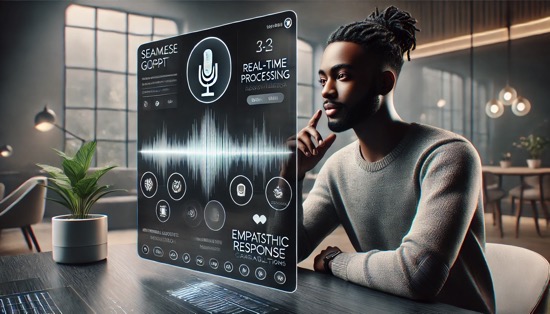
The new voice mode allows for seamless, real-time conversations, enabling users to interrupt and interact with the AI more naturally. Unlike previous versions, which required converting spoken input to text, GPT-4o processes audio inputs directly, reducing latency and enhancing the conversational experience.
- Seamless, real-time conversations
- Direct processing of audio inputs, reducing latency
- Enhanced conversational experience
2. Emotional Intonation:
GPT-4o can detect and respond to emotional cues in a user's voice, such as excitement, sadness, or even singing. This capability aims to make interactions more empathetic and human-like.
- Detects and responds to emotional cues
- Makes interactions more empathetic and human-like
3. Multimodal Capabilities:
The model combines voice, text, and vision capabilities, allowing it to understand and generate responses based on audio inputs without needing auxiliary models. This integration supports more fluid and dynamic interactions.
- Combines voice, text, and vision capabilities
- Supports more fluid and dynamic interactions
4. Safety and Ethical Considerations:
OpenAI has implemented several safety measures to ensure the responsible use of its new voice mode. These include restricting the voice mode to four preset voices to avoid deep fake controversies, using content filters to block the generation of copyrighted or harmful audio content, and conducting extensive testing with external red teamers to identify and mitigate potential safety risks.
- Voice Presets: Four preset voices to prevent misuse
- Content Filters: Blocks generation of copyrighted or harmful audio content
- Extensive Testing: Over 100 external red teamers (individuals simulating attacks from outside the organization's network perimeter) tested across 45 languages
5. Future Enhancements:
OpenAI plans to enhance its voice mode by adding video and screen-sharing features. These new additions will enable users to tackle more advanced tasks, such as solving math problems or coding issues, with the help of visual aids. These enhancements will be introduced at a later date.
- Plans to incorporate video and screen-sharing features
- Enables more complex tasks through visual aids
Conclusion
The rollout of OpenAI's Advanced Voice Mode marks a significant step forward in developing AI-powered voice assistants. By combining real-time interaction, emotional sensitivity, and robust safety measures, OpenAI aims to provide a more natural and secure user experience. As the technology becomes available to more users, monitoring its impact and addressing ethical and legal challenges will be crucial.
FAQ:
Q: Who currently has access to the Advanced Voice Mode?
A: The feature is rolling out to a small group of ChatGPT Plus subscribers, and it will be expanded to all Plus users by fall 2024.
Q: What makes GPT-4o's voice capabilities unique?
A: GPT-4o is multimodal and handles speech-to-text, processing, and text-to-speech tasks simultaneously, resulting in lower latency and more natural conversations.
Q: What safety measures are in place for the new voice mode?
A: OpenAI has implemented voice presets to avoid deepfake controversies, content filters to prevent the generation of copyrighted audio, and extensive testing with external red teamers (your organization authorizes ethical hackers to emulate real attackers' tactics, techniques, and procedures (TTPs) against your systems) to ensure safety.
Q: Will OpenAI introduce video capabilities in the future?
A: OpenAI plans to introduce video and screen-sharing capabilities, enabling more complex interactions through visual aids.
Comments
Sign in to join the conversation.
No comments yet